







Designing a child’s bedroom for calm and independent learning
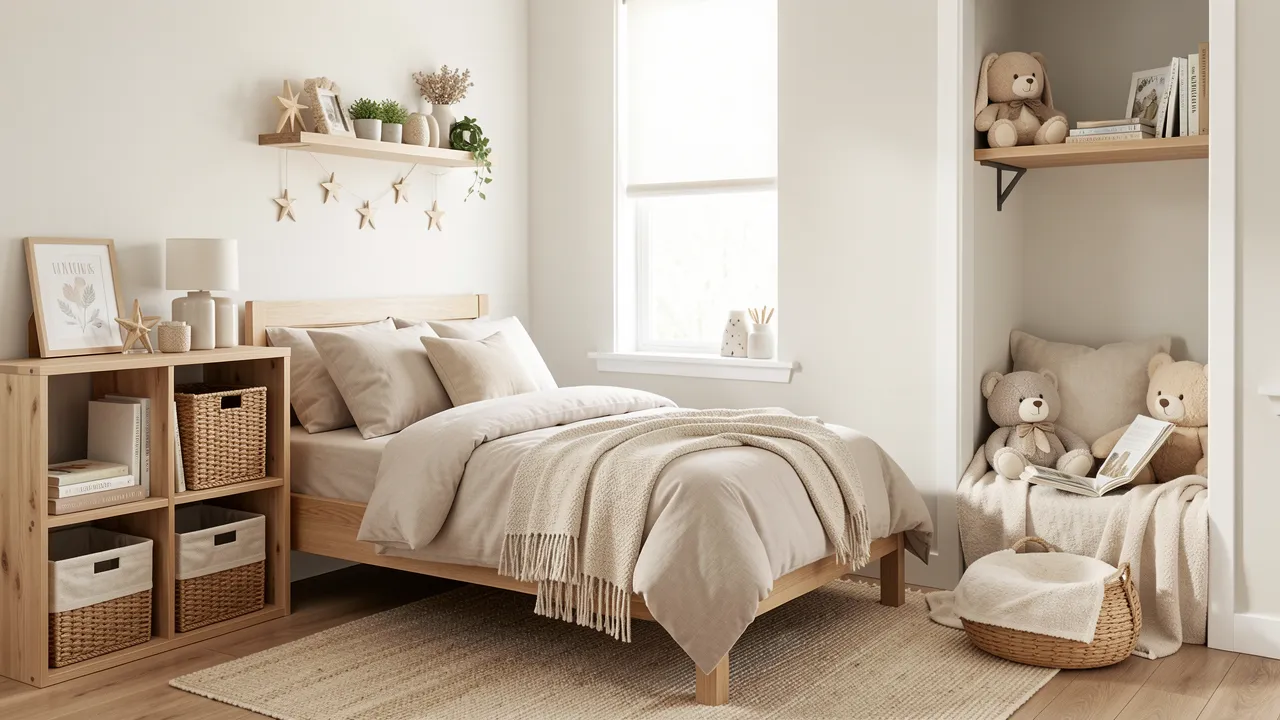
A child’s bedroom can do far more than provide a place to sleep. When arranged with care, it becomes a familiar setting for bedtime rituals, quiet concentration, self-care and imaginative play. You do not need a large room or a themed makeover. A few thoughtful choices in colour, bedding, furniture and storage can create a space that feels safe while giving your child more opportunities to act independently.
A restful bedroom begins with sensory comfort
Sleep is closely linked to a child’s ability to regulate emotions, learn new skills and enjoy daily routines. The bedroom should therefore send clear, gentle signals that the day is slowing down. Choose a limited palette of soft shades, such as warm white, pale green, dusty blue or muted peach. These colours can appear on walls, curtains, rugs and small accessories without making the room feel visually busy.
Soft, breathable bedding is equally valuable. Cotton sheets, a lightweight duvet suited to the season, and a familiar blanket can make the bed feel reassuring night after night. For babies, follow current safe-sleep guidance and keep the cot clear of loose pillows, heavy quilts and toys. Older children can enjoy a few carefully chosen cushions or a comforting soft toy, provided the bed remains easy to use and not overcrowded.
For nursery textiles, children’s bedding and gentle decorative details, magmar.eu can be a useful reference point. Coordinating duvet covers, fitted sheets, cushions and fabric accessories creates a coherent visual atmosphere without requiring matching furniture throughout the room. Natural-feeling textures, subdued patterns and washable fabrics suit the practical demands of family life while helping the sleep area feel distinct from the play area.
Keep bright screens, noisy toys and highly stimulating decorations away from the bed. A small bedside lamp with warm light is more suitable for a story than a ceiling light that floods the whole room. Repeating the same short routine, such as tidying a book, choosing pyjamas and listening to a story, helps the bedroom become associated with rest.
Accessible organisation can build everyday independence
A well-organised room allows children to participate in their own care. When clothes, books and toys are placed at their height, they can make small choices and take responsibility without needing constant adult help. The aim is not perfection. It is to make the next action obvious.
Create clear homes for everyday belongings
Rather than filling the room with large storage units, use a few simple categories. A young child can understand where books belong, where dirty clothes go and where building blocks are kept when each area has a visible purpose.
-
Use low, open storage for favourite toys. Place a modest number of toys in baskets, trays or low shelves. Rotate the rest every few weeks. This reduces visual clutter and helps children focus for longer on one activity, whether they are stacking blocks, arranging animals or completing a puzzle.
-
Make dressing achievable. A low drawer, small rail or labelled fabric basket can hold a limited choice of weather-appropriate clothes. For preschoolers, picture labels are often more useful than written words. You might group socks, tops and trousers in separate containers so that getting dressed becomes a manageable sequence.
-
Add a basket for bedtime preparation. Keep pyjamas, a favourite book and a comfort item in one predictable place. Your child can help collect these items before bed, turning a potentially rushed moment into a calm routine.
-
Give books a visible place. Front-facing book ledges display covers rather than spines, making it easier for younger children to select a story independently. A small collection encourages rereading, vocabulary development and personal preferences.
-
Include a laundry solution at child height. A soft basket or open hamper makes one of the earliest household responsibilities accessible. A simple request, such as placing worn clothes in the basket, supports consistency without turning the bedroom into a rule-bound space.
Furniture should also match your child’s stage of development. Babies need safe changing and sleep arrangements, with supplies secured and out of reach. Young children benefit from rounded edges, anchored shelves and pathways clear enough for them to move safely. Check that heavy furniture is fixed to the wall and that cords, small objects and unstable lamps are removed from reach.
Imaginative details can support quiet play and emotional security
Decoration has a role beyond appearance. A room with a few poetic touches can invite storytelling and comfort, especially during periods of change such as starting nursery school, moving to a new home or welcoming a sibling.
A star garland above a reading chair, a moon-shaped night light or a small collection of wooden animals can prompt imaginative play without overwhelming the room. Natural materials, including wicker baskets, cotton canopies and wooden picture frames, bring warmth and texture. Choose one or two ideas that your child can return to, rather than covering every surface with imagery.
A cosy reading corner is particularly effective. It may be as simple as a floor cushion, a soft rug, a low lamp and a basket of books. This area gives your child a place to look at pictures, listen to an audiobook or sit quietly after an active day. If space is limited, the corner can be created beside the bed and packed away in the morning.
Invite your child to contribute in small ways. They might choose between two cushion covers, decide which drawings to display or place a favourite object on a shelf. These choices help the room feel personal while allowing you to maintain a calm overall design.
A child-centred bedroom supports learning beyond school
The most useful children’s bedroom is not the most elaborate one. It is a room where sleep feels predictable, possessions are accessible and play has room to unfold at an unhurried pace. By combining gentle textiles, orderly storage and a little imaginative warmth, you give your child a setting that supports both comfort and growing capability.
- Keep the sleep zone visually calm, with soft colours, breathable bedding and warm lighting.
- Store daily items at your child’s height to encourage dressing, tidying and bedtime participation.
- Limit available toys and use simple categories to make independent play easier.
- Add a reading nook or small imaginative feature that offers comfort without visual overload.
- Adapt the layout as your child grows, keeping safety, access and routine at the centre of each change.