







Simple classroom games for listening skills

Listening is a foundation for classroom learning, yet it can be difficult to practise through worksheets alone. Short, well-structured games give pupils a reason to focus, remember details and respond thoughtfully. They also bring movement, laughter and variety to lessons. The activities below require little preparation and can be adapted for early years, primary classes and small support groups.
Listening games give every learner a role
The best listening games have clear rules, a brief playing time and a simple success measure. Pupils should know what they are listening for, whether that is a sound, a sequence of words, a direction or a change in tone.
Play “Simon says” with a learning twist
“Simon says” is familiar, but it can be adjusted to match almost any lesson. Give commands connected to classroom topics, such as “Simon says point to a triangle,” “Simon says touch something made of wood,” or “Simon says show three fingers.”
For a more demanding version, vary the wording:
- “Simon says clap twice, then sit down.”
- “Simon says stand behind your chair and whisper your name.”
- “Touch your head, then turn around.”
Pupils must listen to the full instruction before acting. Keep rounds short, and invite confident pupils to lead commands once they understand the pattern.
Build a sound sequence
Use simple classroom sounds, such as clapping, tapping a pencil, ringing a bell or rustling paper. Make a sequence of two sounds and ask pupils to repeat it. Gradually extend the pattern as the group becomes more secure.
For example, clap, tap, clap can become clap, tap, rustle, clap. Pupils can repeat the sounds together, work in pairs or write symbols to represent what they heard. This game develops auditory memory without requiring specialist equipment.
Short games can strengthen attention during transitions
Listening practice does not need a dedicated lesson slot. A two-minute game after break, before lunch or while pupils wait for materials can settle the room and reset attention.
Try “What changed?”
Ask pupils to close their eyes or face away from the front. Make a small change to the sound environment, such as closing a drawer, moving a chair, switching off a fan or placing a book on a desk. Pupils then identify what they heard.
You can also use spoken changes. Say a familiar sentence twice, changing one word on the second attempt: “The cat slept on the mat” becomes “The dog slept on the mat.” Pupils raise a hand when they spot the difference.
This approach works particularly well when the class needs a calm activity with a clear focus.
Use “Follow the leader” for precise instructions
Choose one pupil as the leader. They give a short sequence of actions for the class to follow, such as “Stand up, touch your shoulders, then sit down.” The rest of the group must wait until the whole instruction has been given.
To make the activity more challenging, ask pupils to complete directions in reverse order. If the leader says, “Clap, stamp and wave,” pupils wave, stamp and clap. Keep the sequence to two or three actions for younger children.
Waiting before responding is a valuable habit. It encourages pupils to listen past the first word rather than guessing what comes next.
Story-based activities make listening meaningful
Stories naturally invite children to predict, remember and respond. They can be used with picture books, class novels, oral storytelling or teacher-made scenarios.
Pause and predict
Read a short section of a story, then stop at a moment of uncertainty. Ask pupils to listen for clues before offering a prediction. Prompts may include:
- “What did the character say that makes you think this?”
- “Which detail did you hear about the setting?”
- “What might happen next, based on the problem?”
Encourage pupils to repeat a word or phrase from the story in their answer. This keeps discussion rooted in attentive listening rather than quick guessing.
Create a listening detective task
Tell pupils they are listening detectives. Before reading, give them one or two things to listen for, such as a repeated word, a character’s feeling or a sound mentioned in the story. Each time they hear the target, they can place a counter in front of them or make a tally mark.
For younger pupils, use pictures as prompts. For older pupils, ask them to collect evidence about a character’s motives or the order of events.
Family routines can reinforce these habits beyond the classroom. Everyday family routines that boost early learning at home offers practical ways for adults to build language and attention into ordinary moments.
Clear routines help games remain inclusive
A listening game should feel achievable for every pupil. Some children may find spoken instructions hard to process, especially in a noisy classroom. Small adjustments can preserve the challenge while reducing unnecessary barriers.
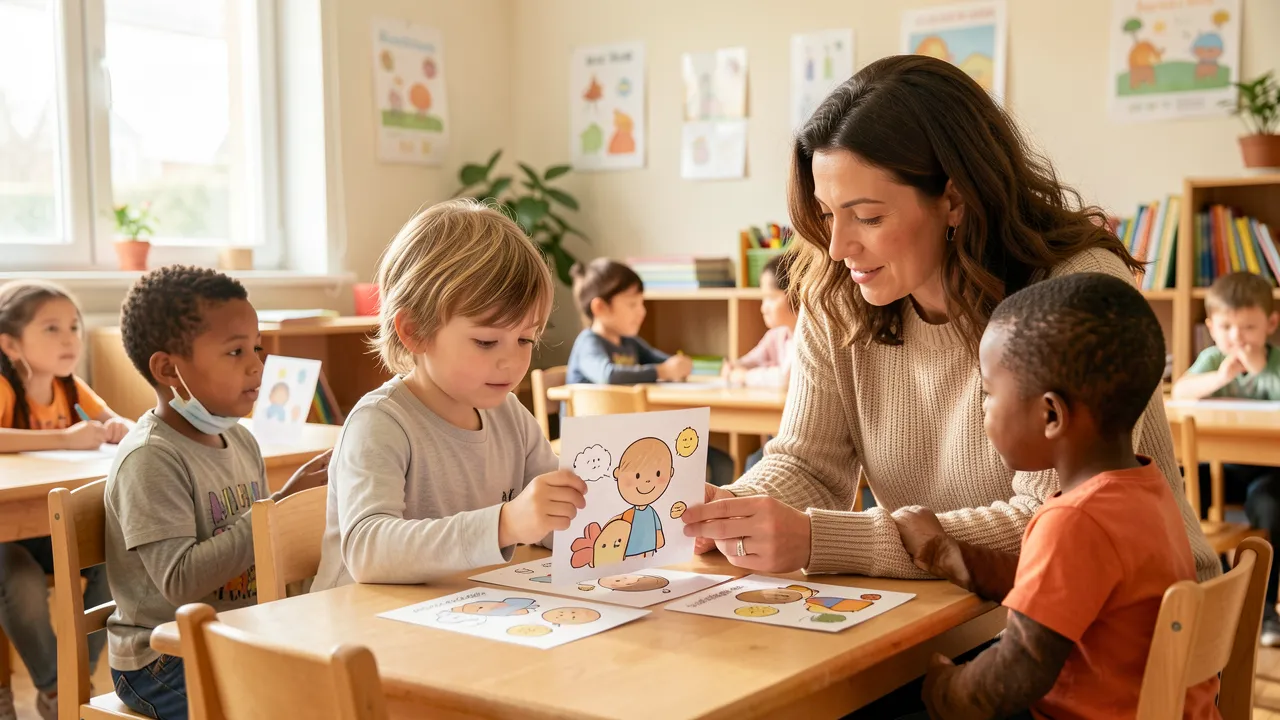
Speak at a measured pace, use short sentences and repeat directions once when needed. Pair verbal instructions with gestures or picture cards. Give pupils a few seconds of thinking time before asking for an answer. In group games, allow children to watch a round before joining in.
Praise specific listening behaviours, such as waiting, remembering the second instruction or noticing a changed word. This makes the skill visible and gives pupils a clear next step.
A simple approach keeps listening practice effective
Listening games work best when they are brief, repeated regularly and connected to the needs of the class. You do not need complicated resources or lengthy explanations. A familiar game with one new rule can provide purposeful practice in just a few minutes.
Key points to carry into your next lesson include:
- Choose one listening skill, such as memory, attention or following directions.
- Keep instructions brief and model the first round.
- Increase difficulty gradually through longer sequences or finer details.
- Use stories, sounds and movement to maintain interest.
- Offer visual support and thinking time where needed.
- Notice and name positive listening behaviours.
With regular use, these games can help pupils become more confident listeners, more thoughtful responders and more active participants in classroom learning.